
Kratom extract have become increasingly popular among experienced kratom consumers because they offer a more concentrated form of the plant compared to traditional powder or capsules. However, extracts can also be confusing for new buyers. Labels often contain technical terms like alkaloid percentages, mitragynine content, and concentration ratios that are not immediately obvious to interpret.
Learning how to read kratom extract labels is essential for anyone who wants to make informed purchasing decisions. Proper label interpretation helps you understand product strength, compare brands accurately, and avoid accidentally consuming a much stronger product than expected.
Unlike standard kratom powder products such as Happy Hippo Kratom Powder, which typically contain the plant in its natural ground form, extracts are concentrated and therefore require clearer labeling. Premium extract products like OPMS Black Kratom Capsules often display detailed alkaloid information to help consumers gauge potency and quality.
MIT Percentage Explained
One of the most important numbers you will see on kratom extract labels is the MIT percentage. MIT stands for mitragynine, the primary alkaloid found in kratom leaves. Mitragynine plays a major role in determining the overall strength and character of a kratom product.
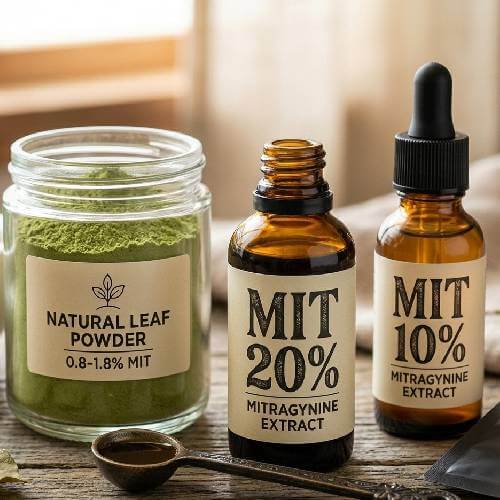
In natural kratom powder, mitragynine content typically ranges between 0.8% and 1.8%. Because extracts concentrate the plant material, the percentage can be significantly higher depending on the extraction process used by the manufacturer.
For example, a kratom extract label might show:
- MIT: 10%
- MIT: 20%
- MIT: 40%
These numbers indicate the concentration of mitragynine present in the extract. A higher percentage generally means the product is more concentrated relative to raw kratom leaf.
Understanding MIT percentage helps consumers estimate how strong a product may be compared to standard kratom powder. Someone familiar with products like Happy Hippo Kratom Powder may notice that extract products often contain several times the mitragynine concentration found in natural leaf.
However, it is important to remember that MIT percentage does not tell the entire story about a product’s overall composition. Kratom contains dozens of naturally occurring alkaloids, and mitragynine is only one part of that profile.
Total Alkaloids
Total alkaloids represent the combined concentration of all measurable alkaloid compounds present in a kratom extract. These compounds occur naturally in kratom leaves and contribute to the plant’s unique chemical makeup.
When a label lists total alkaloids, it is essentially giving a broader picture of the extract’s composition beyond just mitragynine alone.
A kratom extract label might show something like:
- Total Alkaloids: 15%
- Mitragynine: 10%
In this example, mitragynine makes up a large portion of the extract’s alkaloid content, but additional minor alkaloids are also present. These secondary compounds are naturally found in kratom leaves and vary depending on plant genetics, growing conditions, and processing methods.
Products that provide both mitragynine percentage and total alkaloid values tend to offer greater transparency. This type of labeling allows buyers to better understand what they are purchasing.
High-quality extract manufacturers frequently include detailed alkaloid information on their packaging. For example, premium extract products such as OPMS Black Kratom Capsules often display potency indicators designed to help experienced users identify stronger extract formulations.
When evaluating total alkaloids on a label, it is helpful to remember that higher numbers typically indicate greater concentration. However, concentration does not necessarily mean better quality. Extraction methods, raw leaf quality, and manufacturing standards all play an important role in the final product.
OPMS Black Kratom Capsules

$9.99
$14.99
OPMS Black Kratom Capsules OPMS Black Kratom Capsules Review The pinnacle of kratom quality with OPMS Black Kratom Capsules, crafted for those who demand the best in their kratom experience. Each capsule is packed with 310mg of Mitragyna Speciosa, meticulously… read more
Comparing Products Safely
Once you understand MIT percentage and total alkaloid content, the next step is learning how to compare different kratom extract products responsibly.
Because extracts are concentrated, small differences in alkaloid percentages can represent significant changes in overall potency. This is why reading labels carefully before purchasing is extremely important.
When comparing kratom extracts, consider the following factors:
- Alkaloid percentages: Look at both mitragynine and total alkaloids rather than focusing on one number alone.
- Serving information: Extracts may contain multiple servings per container.
- Product format: Capsules, tablets, liquids, and powders may contain different concentrations.
- Brand transparency: Reliable manufacturers usually provide detailed labeling.
For example, a consumer transitioning from traditional powder products like Happy Hippo Kratom Powder to extract capsules may notice that extracts often require much smaller serving amounts due to their higher concentration.
Another helpful tip when comparing kratom extracts is understanding extract ratios. Some labels display numbers such as:
- 10:1 extract
- 25:1 extract
- 50:1 extract
These ratios describe how much raw kratom leaf was used during the extraction process relative to the final extract yield. However, ratios alone do not always reflect the final alkaloid concentration. Two extracts with the same ratio may still have different MIT percentages depending on the raw material used and the efficiency of the extraction process.
Because of this, alkaloid percentages tend to be a more reliable indicator of potency than ratios alone.
Consumers should also pay attention to labeling clarity. Well-labeled products often include:
- Alkaloid percentages
- Serving size information
- Ingredient lists
- Manufacturing details
Clear labeling helps buyers compare options more accurately and choose products that match their experience level.
More advanced extract products, such as OPMS Black Kratom Capsules, are often marketed toward experienced users who already understand how extract potency differs from traditional kratom powders.
Conclusion
Understanding how to read kratom extract labels is an essential skill for anyone exploring concentrated kratom products. Labels provide valuable information about alkaloid content, potency, and product transparency that helps buyers make informed decisions.
The two most important elements to evaluate on kratom extract packaging are mitragynine percentage and total alkaloid content. These numbers offer insight into how concentrated the extract may be compared to traditional kratom powder.
Learning to interpret these values allows consumers to compare products safely, identify stronger formulations, and better understand the differences between standard kratom leaf products and extracts.
For example, someone familiar with natural kratom products like Happy Hippo Kratom Powder may notice that extract capsules such as OPMS Black Kratom Capsules typically display significantly higher alkaloid concentrations due to the extraction process.
FAQs
What does MIT mean on kratom extract labels?
MIT stands for mitragynine, the primary alkaloid found in kratom leaves. It is commonly listed as a percentage on extract labels to indicate the concentration of this compound within the product.
What is considered a high MIT percentage?
In natural kratom powder, mitragynine content usually ranges between about 0.8% and 1.8%. Extract products may contain significantly higher percentages because the alkaloids have been concentrated during processing.
Why do some kratom extracts list total alkaloids?
Total alkaloids represent the combined concentration of all measurable alkaloid compounds present in the extract. This provides a broader picture of the product’s composition beyond mitragynine alone.
Are extract ratios like 10:1 or 50:1 reliable indicators of potency?
Extract ratios describe how much raw kratom leaf was used during production, but they do not always reflect final alkaloid concentration. MIT percentage and total alkaloid content usually provide clearer information about potency.
How are kratom extracts different from kratom powder?
Kratom powder, such as Happy Hippo Kratom Powder, is made by drying and grinding kratom leaves. Extract products are concentrated versions of the plant that contain higher levels of alkaloids per serving.